
A deck extends the comfort of home into the outdoors. Every beam, board, and fastener works together to create strength and balance. If you understand how each part connects, you can plan or maintain your deck more confidently.
Below are the sixteen main parts of a deck, from the foundation beneath the soil to the surface you walk on.
1. Deck Foundation
The foundation carries the deck’s weight and transfers it to the ground. Concrete footings are placed below the frost line to keep the structure stable through winter changes.
For larger decks or taller decks, these footings may be deeper or reinforced with rebar. A steady foundation keeps the deck level for years.
2. Support Posts
Support posts rise from the footings to hold the deck frame above the ground. They handle vertical loads and influence how much movement the deck allows.
Posts are usually made from pressure-treated lumber or metal. Using post anchors at the base helps prevent moisture damage where the post meets concrete.
3. Deck Beams
Beams stretch horizontally across the top of the posts. They carry the combined weight of the deck and spread it evenly to the supports below.
Some larger decks use multiple beams for added structural support. Each beam should be securely fastened with metal brackets or bolts that meet local building codes.
4. Deck Joists
Joists form the internal skeleton of the deck structure. They run perpendicular to the beams and hold the deck boards above them.
The spacing between joists depends on the type of decking boards. Composite decking boards often need tighter spacing than traditional wood, which can span wider gaps. Joist hangers made from galvanized or stainless steel keep everything aligned.
5. Rim Joists
Rim joists outline the deck’s perimeter and tie the joists together. They define shape and resist twisting. They also provide a clean edge for attaching fascia or deck skirting that conceals the substructure.
6. Ledger Board
When a deck connects to a house, the ledger board anchors it. It’s bolted directly to the home’s frame and must be perfectly level.
Flashing or flashing tape sits above the ledger to block water and prevent moisture damage. Many deck issues begin here, so this step needs careful attention.
7. Deck Framing Connectors
A strong deck depends on its connectors. Metal brackets, joist hangers, and corner ties hold everything together. These small parts preserve structural integrity through wind, rain, and temperature changes.
Hardware should always be galvanized or stainless steel, as these materials resist corrosion over time.
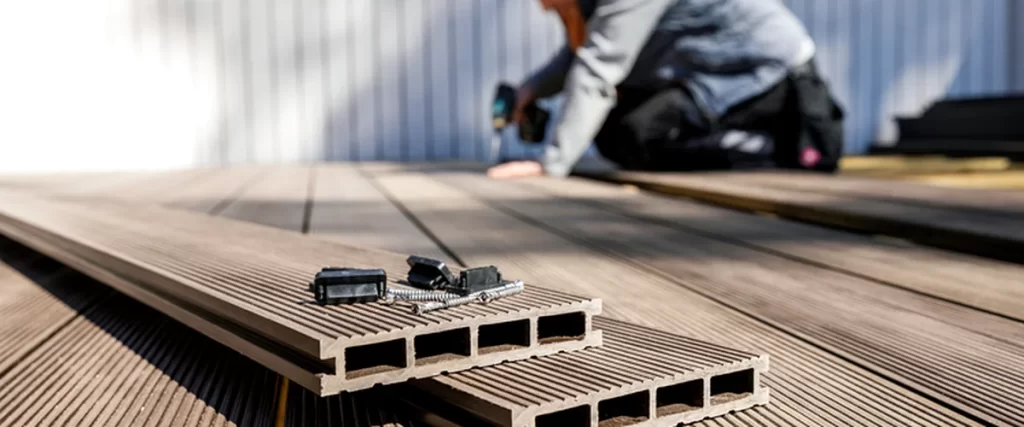
8. Decking Boards
Decking boards create the deck surface where people gather and furniture sits. Materials vary: composite decking, traditional wood, or other composite materials that mimic natural grain.
Each type comes in different deck board profiles. Grooved boards allow for hidden fasteners, creating a smoother finish. Composite deck boards provide low maintenance, while wood offers natural warmth.

9. Deck Floor and Surface Components
The deck floor is a combination of boards, fasteners, and trim that completes the walking surface. Boards should be laid with consistent spacing for drainage and expansion.
Adding flashing tape on top of joists before installing boards helps protect the framing from trapped moisture. This small step extends the deck’s lifespan.
10. Deck Railing System
The deck railing provides safety and defines the style of the outdoor living space. It includes both horizontal supports and vertical components, all forming a unified railing system. Main components include:
- Railing posts, which anchor the system to the deck framing.
- Top and bottom rails, which connect the posts.
- Balusters, which fill the space between rails and add rhythm to the design.
Every deck railing system must meet local building codes for height and spacing.
11. Top Rail
The top rail runs along the upper edge of the railing. It provides a comfortable surface to hold and completes the line of the deck. Some homeowners choose the same material as their deck surface, while others prefer a contrasting finish that highlights the railing design.
12. Bottom Rail
The bottom rail connects the balusters near the base. It stabilizes the entire railing system and maintains even spacing. When paired with strong railing posts, it helps the railing resist movement and wear.
13. Railing Posts
Railing posts are the backbone of the deck railing. They attach directly to the deck frame, extending upward to hold the rails and balusters.
Some builders align these posts with the support posts below for continuous structural support. Each post must be securely fastened with through-bolts or heavy-duty connectors.
14. Stair Stringers and Treads
Deck stairs connect the platform to the ground. Stringers are the angled boards that support each step, while stair treads are the surfaces you step on.
Straight stairs are most common, but the deck’s design might include turns or landings for a softer transition. Consistent tread height and width make stairs safer and more comfortable.
15. Deck Skirting
Deck skirting closes the space between the deck and the ground. It hides the substructure, adds character, and prevents animals or debris from collecting underneath.
Materials often match the decking surface or composite boards used above. Skirting panels also help with airflow, reducing moisture buildup under the deck.
16. Finishing Details and Protection
Finishing touches protect the deck structure and improve appearance. Fascia boards cover the edges, trims seal corners, and flashing tape shields joints from water.
These elements may seem minor, but each contributes to the deck’s stability and structural integrity.
How Substructure and Surface Work Together
The deck’s substructure supports everything above. Beams, posts, and joists form the core, while boards, railings, and trims complete the surface.
A well-balanced deck building process considers both. The substructure provides strength. The surface defines the experience. Together, they create a deck that looks beautiful and performs reliably.
Building with Durability in Mind
Every material choice affects how long a deck lasts. Composite decking resists moisture and fading, while traditional wood offers natural appeal but needs care.
Using durable materials, flashing tape, and metal brackets during construction keeps the structure solid. Attention to drainage and spacing prevents rot and warping.
Each connection, no matter how small, adds to the overall deck’s stability and structural integrity.
Following Local Building Codes
Every region has rules for deck construction. Local building codes set standards for railing height, joist spacing, and footing depth. These requirements protect users and maintain consistency in safety.
Working with professionals familiar with these codes ensures your deck’s frame meets regulations from the start.
The Balance Between Strength and Style
A deck is both a structure and a space for connection. The deck’s structural integrity depends on accurate framing and secure fasteners. Its comfort depends on the texture of decking boards, the height of the railing system, and the way stairs meet the ground.
Each deck component influences how the space feels. Wide composite boards create a sleek, modern look, while narrow wood planks add warmth and rhythm. Details like railing posts or fascia lines shape the personality of the deck as much as they contribute to function.
When the Details Feel Like Too Much
There are many parts to deck building, and each one matters. Planning a layout, selecting materials, and making sure everything aligns can feel like a full-time project.
If you’d rather spend your time enjoying your backyard instead of measuring joist spans or calculating beam loads, a professional team can handle it for you.
At Decks On Point, every deck is built with care, from the footing to the top rail. The structure stands solid, the surface looks refined, and the entire deck feels right for the home it serves.
Call us at (317) 903-2431 or message us here to begin your deck project with people who build with precision and heart.