
You reach the same point every spring. The yard is finally usable again, the back door opens to grass or mud, and the idea of a new deck starts to feel less like a want and more like a need. Ground-level deck plans are popular for a reason. They’re practical, easier to access, and fit naturally into most backyards without towering railings or long stair runs.
But that doesn’t mean building a ground-level deck or a floating deck is simple. Prep work, drainage, framing, and finishing all matter more when the deck sits close to the ground. Miss one step, and you’ll notice it fast.
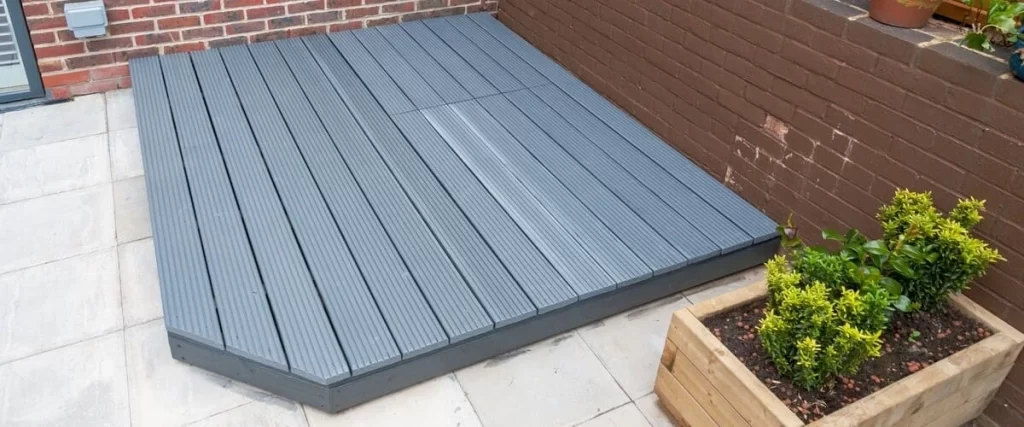
Plan Your Ground-Level Deck the Right Way
Before any lumber is delivered or a shovel hits the ground, the plan needs to be solid.
A well-built floating deck depends heavily on location, soil conditions, and local building codes. In many areas, building one also requires a permit.
Here’s a quick snapshot of what matters most when planning your ground-level deck:
| Considerations | Why It Matters |
| Deck location | Impacts drainage, sun exposure, and access from the house |
| Frost line | Determines footing depth in colder climates |
| Deck height | Affects railing rules and framing requirements |
| Material choice | Impacts lifespan and maintenance |
| Local building codes | Dictates spacing, fasteners, and inspections |
Think about how you’ll actually use the space. Will it sit right outside a door, wrap around a pergola, or stop short of a fence line? The answers shape the deck design more than any sketch ever will.
How to Choose The Best Spot for Your Deck
Walk your yard. Look for slopes, soggy grass, or areas where water pools after rain. A level deck starts with a level site, and drainage problems don’t fix themselves.
Pay attention to:
- Distance from the house and door swing
- How close the deck sits to property lines
- Nearby trees and root systems
- Existing patios or concrete edges
The goal is a surface that feels intentional, not squeezed into a leftover space.
The Foundation for a Rock Solid Ground-Level Deck
The foundation is what separates a deck that lasts from one that shifts after the first freeze. Ground-level deck plans often use deck blocks instead of full footings, but climate and soil decide what’s appropriate.
A floating deck isn’t attached to the house. It sits on blocks or footings placed directly on prepared ground. This works well where frost movement is minimal and soil drains properly.
Deck blocks are popular because they:
- Speed up installation
- Reduce digging
- Keep posts above ground contact
Still, the ground underneath matters. Landscape fabric should be laid first, followed by a compacted gravel layer. This limits weed growth and helps water drain away from the deck frame.
When Footings are Required
In colder regions, footings often need to extend below the frost line. This prevents seasonal movement that can twist framing and pull fasteners loose. Digging deeper holes takes more time, but it keeps the structure stable year after year.
Always check local building codes. Some areas require footings regardless of deck height, especially if the deck supports a pergola or a heavy load.

Framing a Level Deck That Stays Square
Framing is where precision matters most. A deck frame that’s off by even a small amount will show it once deck boards go down.
Pressure-treated lumber is the standard choice for framing because it handles ground contact and moisture better than untreated wood. Beams and joists need proper spacing to support the surface material you choose.
Start by laying out the perimeter. Measure diagonally from opposing corners to confirm the frame is perfectly square. If the numbers don’t match, adjust before fastening anything permanently.
Helpful tips during framing:
- Use joist hangers for clean, strong connections
- Check the level often, not just at the corners
- Keep spacing consistent across all joists
- Confirm the frame edge stays straight
A circular saw, a good drill bit, and quality deck screws make the job smoother. Rushing this stage always leads to frustration later.
Laying Deck Boards for a Clean Finish
Once framing is done, the fun part starts. Deck boards define how the space feels underfoot and how it looks from the yard.
Wood boards offer a classic look and a lower upfront cost, but they require regular sealing. Composite decking costs more, but it resists moisture, insects, and fading far better over time.
When laying boards from one side of the deck to the other, keep the gaps consistent. Spacing allows water to drain and boards to expand naturally. Many installers use spacers or a scrap board as a guide.
Pay attention to:
- Board direction and pattern
- Edge alignment at the perimeter
- Hidden fasteners versus face screws
- Clean cuts around posts and corners
A level deck surface should feel smooth and solid when you walk across it. It shouldn’t bounce or squeak.
Finishing Touches That Complete Your Deck
Ground-level decks often don’t have railings, but that doesn’t mean you should overlook the finishing details. Trim boards along the edge hide framing and give the deck a finished appearance.
Think about how the deck meets the yard. Some homeowners add a gravel border, others let grass grow right up to the perimeter. Both can work if drainage is handled correctly.
Other finishing ideas include:
- Built-in benches
- Planters along one side
- Low-voltage lighting
- Steps or transition boards at doors
If the deck sits close to the soil, sealing exposed wood is smart. Moisture finds every weak point eventually.
For professional deck building standards and inspiration, you can explore resources like the International Code Council and This Old House, both of which offer reliable guidance on deck construction and safety.
You can also see how professionals approach framing, permits, and finishes on our deck building services page. It gives a good sense of what a properly built deck should look like from start to finish.
Common Questions About Ground-Level Decks
Do ground-level decks need a permit?
In many areas, yes. Even floating deck designs can require permits depending on size and location. Always confirm with your local building department.
How close can a deck be to the house?
Clearance depends on siding type, drainage needs, and code rules. Leaving space helps with airflow and future maintenance.
Can I build directly on grass?
Unfortunately, no, you must remove the grass. The ground should be compacted, covered with landscape fabric, and topped with gravel or sand before any supports go in.
What’s the best material for ground contact?
Pressure-treated lumber rated for ground contact is standard for framing. Composite decking performs well for the surface when moisture is a concern.
How long does a ground-level deck last?
With proper prep and materials, a well-built deck can last decades. Skipping steps shortens the lifespan dramatically.
Need Help Building Your Ground-Level Deck?
Ground-level deck plans sound straightforward at first, but as you’ve seen, there’s a lot that goes into getting it right. Site prep, foundation choices, framing accuracy, and finishing details all play a role. Many people reach a point where calling a professional just makes more sense. You get fewer headaches, faster results, and a deck that’s built to code and designed to last.
If you’d rather enjoy the finished space than manage every step yourself, call us at (317) 903-2431 or message us here and let Decks on Point take it from there.