
Repair wins when damage is isolated. Replacement wins when the structure itself is the problem.
Indiana’s freeze-thaw winters and humid summers are hard on wood, and knowing which direction to go can save you thousands.
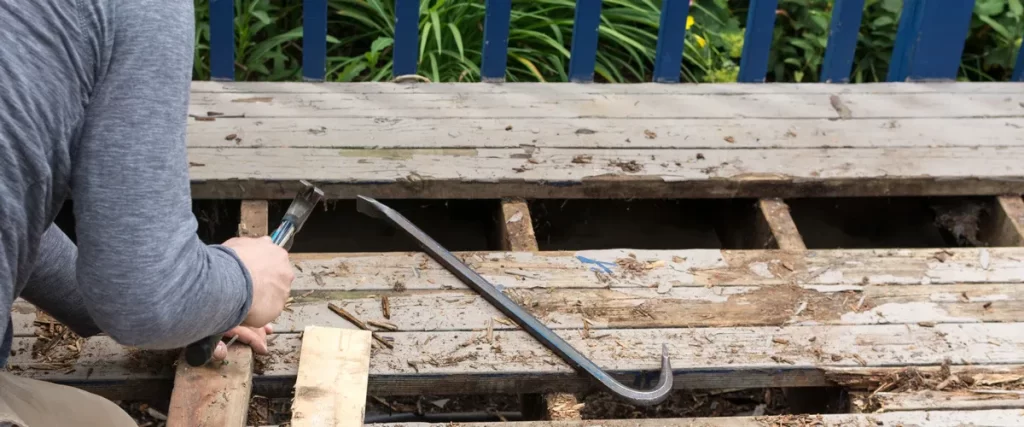
What’s Actually Going On Under Your Feet?
A cracked board here and there? That’s a repair job. But when you’re noticing soft spots, deck railings that wobble when you lean on them, or rot spreading across most of the deck surface, that’s a different conversation entirely.
Indiana’s winters do real work on outdoor structures. Freeze-thaw cycles pull loose screws out of joists, crack traditional wood, and push moisture into places it has no business being. By the time spring arrives, what looked minor in October can turn into significant damage fast.
Three things worth checking before you do anything:
- Structural posts and beams — if these are compromised, patching the surface won’t help
- Deck boards across the whole surface — widespread rot on the existing deck means you’re past the point of spot repairs
- Railings and hardware — loose railings are safety hazards, but in isolation they’re usually a quick, affordable fix
Repair: Where It Makes Sense
Deck repair is the right call when damage is contained. Replacing a few damaged boards, swapping out a railing section, tightening hardware, these are fast, effective, and keep initial cost low. Most Indiana homeowners spend somewhere between $300 and $1,200 for minor work, depending on decking material and scope.
If your deck has a solid frame underneath and only the deck boards are showing wear, repair makes real sense. You’re not buying a whole new structure when you only need a new deck surface.
One thing worth knowing: Indiana’s residential building code applies to outdoor structures, and structural repairs may require a permit. A skilled deck builder will flag this upfront.
Replacement: When the Numbers Shift
| Situation | Repair | Replace |
| 1-3 isolated damaged boards | ✓ | |
| Loose screws or loose railings only | ✓ | |
| Rotted posts or beams | ✓ | |
| Deck unsafe to walk on | ✓ | |
| 50%+ of deck boards are damaged | ✓ | |
| Switching to composite decking materials | ✓ | |
| Curb appeal and outdoor space upgrade | ✓ |
A brand new deck resets the clock. Costs in Indiana typically run between $15 and $35 per square foot for a replacement deck, depending on size and materials.
Composite decks and PVC decking have become the go-to choice across Indiana because they hold up through Indiana’s winters far better than wood decks. Superior durability, no annual staining or sealing. If you’re already replacing, it’s the right time to upgrade.
The Cost Trap Most Homeowners Walk Into

Here’s the honest version: repair costs less right now. Replacement costs less if your deck is already in rough shape, because two or three rounds of repairs on a damaged deck add up fast and eventually become a temporary fix.
Indiana’s lower cost of living extends to contractor labor, which helps. Whether you’re in Fort Wayne, Indianapolis, or one of the state’s smaller towns, local labor rates tend to run more affordable than major cities on either coast.
The trap is running three repair cycles on a whole deck that needed full replacement two years earlier. You spend more in total, and the entire structure still needs to go.
What Actually Matters for Indiana Homeowners
Living in Indiana means outdoor activities are part of the rhythm. Indiana Dunes National Park draws visitors from across the region, farmers markets run through warm months, and summer entertaining happens on decks just like yours. A deck unsafe to use or visually tired gets ignored, which defeats the point of having one.
Wood decks carry a warmth that composite materials have gotten better at replicating, but if you’re starting fresh, the performance gap across four distinct seasons is hard to ignore.
FAQ
How do I know when full replacement is the right call? If the posts or beams are rotted, if the deck feels soft or bouncy in multiple areas, or if more than half the deck boards are damaged, replacement is the more sensible path.
Are composite decks actually worth it in Indiana? For most homeowners, yes. The lower maintenance and better performance through harsh winters offset the higher initial cost over a 10-to-15-year window.
What does deck replacement cost in Indiana? Most projects run between $7,000 and $20,000 depending on size, materials, and features. Indiana labor rates keep costs more manageable than the national average.
Do I need a permit for deck work in Indiana? Minor repairs typically don’t require one. Anything structural or that changes the footprint usually does. Your local building department is the right place to confirm before work starts.
Skip the Headache
Everything above gives you a solid framework, but honestly, the fastest path is a professional set of eyes on the actual deck. Skip the second-guessing and let someone who handles this every day tell you what you’re actually dealing with.
Take a look at ourdeck repair services to see the full scope of what we do, then call us at (317) 903-2431 or message us here and we’ll figure out the right move together.