
Trex® and TimberTech® are still the names most homeowners land on, and in 2026, both have earned that spot. The honest version of this topic, though, is that not every composite board is built the same way, and the gap between a well-matched product and an expensive regret is real.
The best composite deck boards stay looking sharp a decade from now without demanding much of your time in return. Which one that is depends on where you live, how the deck gets used, and how much you want to spend upfront versus over the life of the deck.
Here’s the lay of the land before we get into the details.
| Brand | Type | Capping | Best Fit | Est. Cost/Sq Ft |
| Trex® Transcend Lineage | Capped Composite | 3-sided | High-traffic, full-sun decks | $8–$12 |
| Trex® Enhance | Capped Composite | 3-sided | Budget-forward builds | $5–$8 |
| TimberTech® Composite | Capped Composite | 4-sided | Humid, wet climates | $7–$11 |
| TimberTech® Advanced PVC | PVC Decking | Full PVC | Pool decks, heavy moisture | $10–$15 |
What’s Actually Inside a Composite Board
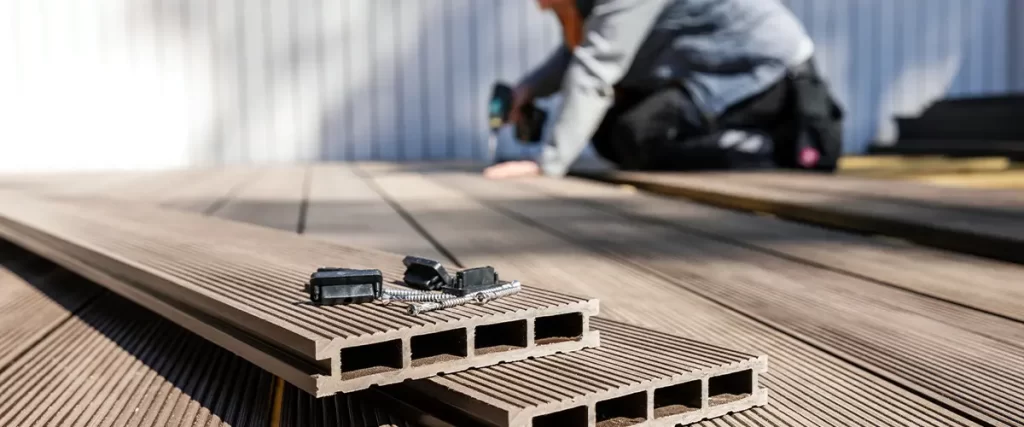
Composite decking is built from wood fibers, recycled plastic, and a protective polymer shell. The wood fiber core carries most of the structural weight and produces those grain patterns that make composite boards look far more convincing than they used to. The recycled plastic component acts as a moisture barrier, keeping water from soaking into the core the way it would with natural wood.
There’s an environmental angle here that tends to get glossed over. Composite boards draw from materials that would otherwise sit in landfills: plastic film, sawmill byproducts, and post-consumer plastics. The EPA has documented that recycling plastic conserves natural resources and reduces greenhouse gas emissions compared to producing new material. For homeowners who want that story to be true, the better composite decking brands do actually deliver on it.
The protective polymer shell is where quality separates. Three-sided capping wraps the top surface and both long edges. Four-sided capping adds to the bottom, which sounds minor until you’re dealing with a deck close to grade or a humid climate where moisture travels up from below.
Trex®: Still Leading, Line by Line
Trex® leads in market recognition for real reasons. Their boards are made from 95% recycled content, combining recycled wood particles and recycled plastic, and the warranty coverage backs the product confidence.
The two lines that come up in most residential conversations:
- Trex® Transcend Lineage is the flagship, and it shows. Three-sided capping, realistic grain patterns, superior scratch resistance, and a 50-year limited warranty covering fade and staining. This is the line built for heavy foot traffic, sustained direct sunlight, and temperature swings that would stress lesser boards over time.
- Trex® Enhance brings capped composite down to a price point that works for straightforward builds. Lighter colors absorb less heat on warm afternoons, which matters if kids are running across the deck barefoot all summer. Hidden fasteners are available across both lines, keeping the surface clean and hardware-free.
One thing worth knowing about heat absorption: darker Trex® boards get warm in full summer sun. Their newer SunComfortable technology addresses this noticeably, so it’s worth asking about if your deck faces south.
TimberTech®: Four-Sided Coverage and a Legitimate PVC Option
TimberTech® composite decking wraps all four sides of every board, including the bottom. For decks in humid climates or builds that sit closer to grade, that bottom layer of protection over the wood fiber core makes a meaningful difference over years of moisture exposure.
TimberTech® Advanced PVC is a different product category entirely. The entire board is solid PVC with no wood fiber core at all. Nothing inside to swell, absorb water, or degrade from moisture exposure over time. It’s a natural fit for pool decks and environments where the boards see water contact regularly.
A few practical notes if you’re comparing TimberTech® to other composite decking brands:
- Four-sided capping gives the board protection from below, not just from foot traffic above
- Lighter color selections run cooler underfoot in direct sunlight, a real factor in Tennessee summers
- Thermal expansion is present in every composite and PVC product; professional installation accounts for this through proper gap spacing, but it’s something that has to be planned for, not ignored
Upfront Cost vs. Long-Term Value
Composite and PVC decking materials run two to three times more per square foot than pressure-treated wood. That gap is real, and it matters at the start of a project. What changes over time is the maintenance math. Pressure-treated decks need annual staining, periodic sealing, and the occasional repair as boards age and weather. A capped composite deck with a solid protective polymer shell needs occasional cleaning and not much else.
Across a 10 to 15-year window, the total composite decking cost difference shrinks significantly. The USDA Forest Products Laboratory has researched alternative decking materials, including recycled plastic composites for exactly these kinds of cost-durability comparisons over time.
If you’re working through the material decision and want the cost breakdown laid out clearly, our post on the best deck material options for different budgets covers that in depth. And if you’re still weighing composite against wood specifically, the detailed rundown in our piece on composite vs. wood decking goes through real-world performance and cost side by side.

Composite Deck Boards FAQ
Does composite decking get hot?
Yes, particularly in darker colors under direct sunlight. Lighter color selections absorb less heat, and some newer product lines include surface technology that reduces temperatures measurably.
How long do composite boards realistically last?
Quality capped composite products carry limited warranties between 25 and 50 years. Real-world performance matches that range when the composite deck installation correctly and maintained with occasional cleaning.
When does TimberTech® Advanced PVC make more sense than capped composite?
For pool decks, low-clearance ground-level builds, and spaces with consistent moisture exposure, the all-PVC construction holds up better over time. The higher upfront cost reflects that durability.
Is the recycled content claim in composite decking real?
For the major brands, yes. Trex® documents 95% recycled material content. TimberTech® has published diversion figures covering millions of pounds of plastic waste. It’s not marketing language without substance.
You Could Research This for Another Hour, or You Could Call Us
At some point, picking between Trex® Transcend Lineage and TimberTech® Advanced PVC stops being helpful and starts being a project of its own. Warranty PDFs, thermal expansion charts, moisture resistance ratings for a south-facing deck in Chattanooga. It adds up fast, and not in a fun way.
We’ve built enough decks in Indiana to know which composite decking brands hold up here, which boards look better a few years in rather than worse, and how to plan a build that creates long-term value instead of surprise repair bills. Take a look at our deck building services to see what we do and how we do it. When you’re ready to talk, call us at (317) 903-2431 or message us here.