
Your deck looks great on top. But underneath? That open gap between the deck surface and the ground is doing your yard no favors, and it might actually be shortening the life of your deck. Deck skirting is the fix, and it does more than just cover up an eyesore.
Homeowners in Indiana deal with real seasonal swings that aren’t kind to anything exposed and untreated. If the underside of your deck isn’t protected, moisture, pests, and debris will find their way in. Over time, that leads to rot, mold, and structural issues that cost a lot to fix.
This article covers the most popular skirting options, which materials hold up best, how ventilation factors in, and what to consider before you commit to a style.
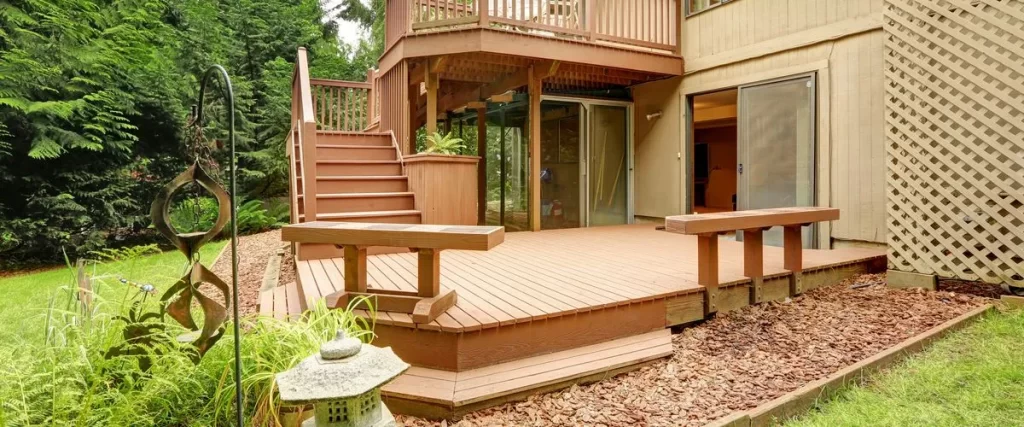
What Is Deck Skirting?
Deck skirting is any material you use to close off the open space between the bottom edge of your deck and the ground. It runs around the perimeter of the deck, covering the framing and foundation from view.
Here’s why it matters beyond the look:
- It keeps pests out. Raccoons, opossums, and stray cats love a crawl space.
- It protects the substructure from debris, water, and direct exposure.
- It can create usable storage space underneath.
- It adds a finished, intentional look to your outdoor space.
A deck without skirting looks unfinished, plain and simple. The framing, posts, and concrete footings are not meant to be visible design features.
5 Popular Deck Skirting Ideas
There’s no single right answer here. The best option depends on your deck’s style, your home’s exterior, and how much maintenance you want to deal with.
Horizontal Boards
Horizontal boards give the deck a clean, modern look with strong visual lines that feel intentional rather than tacked on. You can use composite boards, cedar, or PVC, and the small gaps between slats allow for natural airflow underneath.
Composite horizontal skirting, in particular, is a smart pairing if you already have a composite deck. It creates a seamless, cohesive appearance from the railing down to the ground.
Lattice Panels
Lattice is the classic. It’s affordable, widely available, and lets air flow through easily.
That said, the traditional diagonal wood lattice pattern has started to feel dated to many homeowners. A square lattice looks a bit cleaner, and vinyl or PVC lattice holds up far better over time than wood, without cracking or warping.
If you’re going for a more cottage or garden-style aesthetic, lattice still works well. Just go with a material that won’t require constant upkeep.
Composite Skirting
Composite skirting, made from a blend of wood fibers and recycled plastic, is arguably the most practical option available today. It resists moisture, insects, rot, and fading without needing to be painted, sealed, or stained.
It also comes in a wide range of colors and textures, so matching your existing deck boards is usually easy. TimberTech’s composite deck skirting guide is worth checking out if you want to see what that variety looks like in practice.
And if low maintenance is a priority, composite is the way to go.
Stone or Faux Stone
For homeowners who want something that feels permanent, stone skirting makes a statement.
Real stone is heavy and expensive, and professional installation is essentially required. Faux stone panels are a more accessible alternative. They’re lightweight, easier to work with, and a quality faux stone product can look nearly indistinguishable from the real thing.
Stone works especially well if your home’s foundation or exterior already includes stone elements. It creates an intentional continuity between the house and the deck.
Greenery and Climbing Plants
Planting low-growing shrubs or ornamental grasses around the perimeter of the deck can soften the transition from deck to yard and naturally conceal the underside. For elevated decks with trellis framing, some homeowners train climbing plants up the sides for a garden-forward look.
One important caveat: keep plants at a reasonable distance from wood framing or posts. Direct contact with soil and plant matter accelerates moisture retention, which leads to rot.
This approach works best when paired with a composite deck, which handles moisture exposure much better than wood.
Metal Mesh
Metal mesh is gaining ground as a skirting option for modern or industrial-style outdoor spaces. It provides excellent airflow, looks sharp against the right deck, and holds up well against the elements if you choose a rust-resistant material like stainless steel or galvanized metal.
It’s not a traditional look, but for the right home, it’s a genuinely creative choice.
Consider Your Deck Skirting’s Ventilation
Here’s something that often gets skipped in deck skirting conversations: airflow. Solid skirting panels that completely seal the space under a deck prevent moisture from entering.
That trapped humidity causes mold growth, speeds up wood rot in the framing, and can affect stored items if you’re using the under-deck space for storage.
Vented skirting or removable panels are essential to allow airflow, and vent grilles should be placed at intervals of roughly four to six feet around the perimeter.
A few practical rules:
- If you’re using solid panels (stone, shiplap, board-and-batten), use dedicated vent grilles.
- Use lattice or horizontal slats with gaps between boards to allow passive ventilation.
- Avoid planting dense shrubs directly against the skirting.
- Composite decks handle moisture better, but the wooden framing still needs to breathe.
Turning the Under-Deck Area into Usable Space
If your deck has any elevation, the space beneath it has a lot of potential.
A well-skirted deck can double as:
- A covered storage area for yard tools, cushions, and seasonal gear
- A sheltered spot for garbage and recycling bins
- A low-profile patio beneath the deck with pavers and seating
If you’re planning to use the space for storage, build in an access door on one side of the skirting. It doesn’t have to be elaborate, just a simple framed panel that opens cleanly and blends with the rest of the skirting design.
Easy access makes the storage actually usable rather than a spot where things go to be forgotten.
How to Pick the Right Deck Skirting for Your Home
Before you land on a material or style, run through these questions:
- What does your deck’s surface look like? The skirting should complement or match the deck boards. A TimberTech composite deck pairs naturally with composite or PVC skirting for a cohesive finish.
- What’s your maintenance appetite? If you’d rather not touch the deck skirting for years at a time, avoid wood and go with composite, vinyl, or metal.
- How much height do you have to work with? A deck that’s only a foot off the ground has different skirting needs than one that’s three or four feet elevated.
- What’s the home’s overall style? A craftsman bungalow might call for vertical boards or lattice. A newer contemporary build might look great with horizontal composite boards or metal mesh.
- Do you want storage underneath? If so, factor in an access door from the start, rather than retrofitting one later.
If you’re building a new deck or planning a deck project from scratch, this is all worth discussing with your builder upfront. A good deck builder will incorporate skirting into the overall design rather than treating it as an afterthought.

FAQ About Deck Skirting
Does deck skirting need ventilation?
Yes, always. Even composite deck skirting should allow for some airflow. Completely sealed skirting traps moisture beneath the deck, accelerating rot in the wood framing and leading to mold growth. Use vented materials or install vent grilles at regular intervals.
What is the cheapest way to skirt a deck?
Vinyl lattice panels are generally the most affordable option. They’re easy to cut, widely available, and require almost no maintenance compared to wood lattice. Horizontal PVC boards are another budget-friendly route that also looks more contemporary.
Can I add deck skirting to an existing deck?
Yes. Skirting can be added to an existing deck without major structural work. You’ll need to attach a frame along the bottom perimeter of the deck, then secure the skirting material to that frame. For anything more complex, like stone skirting or built-in storage access doors, professional installation is worth it.
How do I keep animals out from under my deck?
Solid skirting panels with minimal gaps are the most effective barrier. For added protection along the base, consulting a pest control professional about ground-level deterrents is a smart move before finishing the installation.
Is composite skirting worth the cost compared to wood?
For most homeowners, yes. Composite skirting costs more upfront, but it doesn’t rot, doesn’t need painting or sealing, and holds its color for years.
What’s the difference between deck skirting and deck fascia?
Deck fascia is the board that covers the rim joist, which is the outermost perimeter board of the deck frame. Skirting runs along the underside of the deck frame, covering the open vertical space between the frame and the ground.
This Is the Part Where Most People Call a Pro
Reading through all of this, it becomes clear pretty quickly that deck skirting isn’t just stapling some boards around the bottom of your deck. There’s ventilation to account for, material compatibility to consider, access doors to plan, and local building codes that may have something to say about how it all goes together.
The team at Decks on Point has built and skirted composite decks across Westfield, Noblesville, Carmel, and the surrounding Indiana communities. If you want to talk through your deck skirting ideas or get started on a new deck altogether, call us at (317) 903-2431 or message us here.