
Most people don’t think about railing height until someone flags it during a permit review, or worse, an inspection fails.
The good news is that deck railing height code requirements aren’t as complicated as they sound, and once you understand the basics, the whole thing clicks pretty fast.
This article covers the standard heights required by code, how stairs are handled differently, and what commercial properties must address.
By the end, you’ll know exactly what to expect before your deck project gets off the ground.
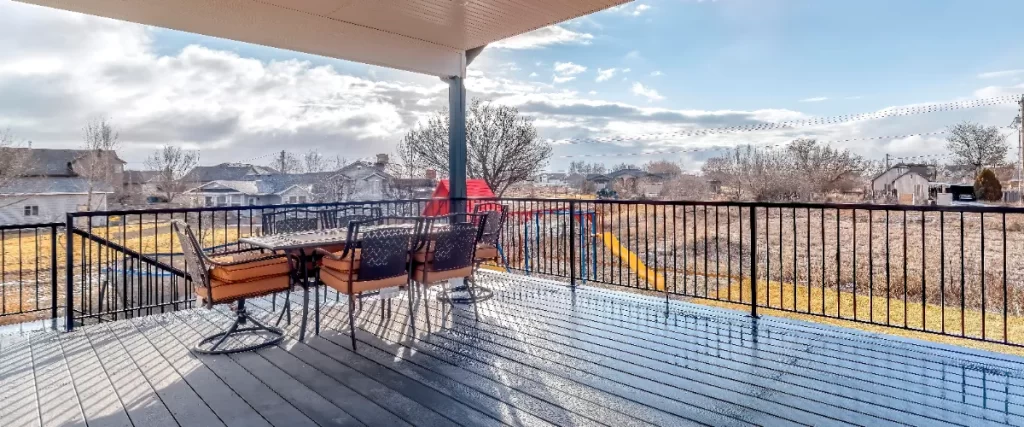
Why Railing Height Actually Matters
Deck railings serve one core purpose: keeping people from falling off elevated structures.
The minimum height requirements exist because researchers and safety organizations found that railings below a certain height don’t effectively prevent accidental falls, especially when adults lean against them or children climb on them.
The International Residential Code (IRC) by the International Code Council (ICC) is the baseline most local jurisdictions work from, even if they’ve modified it slightly.
Standard Deck Railing Height Requirements
Here’s where most homeowners start: what’s the minimum?
Under the International Residential Code, the standard deck railing height depends on how high your deck sits above the ground:
- Decks 30 inches or less above grade typically don’t require railings.
- Decks more than 30 inches above grade require a minimum railing height of 36 inches.
The measurement is always taken from the deck surface to the top rail, measured vertically. Simple enough, but local building codes can and do vary.
Some states and municipalities have adopted stricter amendments to the IRC that require 42 inches for residential decks, regardless of elevation. California and Washington are the most commonly cited examples.
Deck Railing Height Code for Stairs

Stair railings operate under a slightly different set of rules, and this is where things get a little more specific.
Instead of measuring from the deck surface, stair railing height is measured vertically from the line connecting the stair nosings or the front edge of each step.
The IRC requires stair railings to fall between 34 and 38 inches above that reference line.
A few other things to know about stair railings:
- Handrails must be graspable, meaning open spindle designs that can’t actually be gripped don’t count as compliant handrails in all cases.
- The triangular space beneath stair railings, created by the angle of the stair, has its own rules, specifically to prevent a 6-inch sphere from passing through it beneath the bottom rail.
- Stair railings and deck railings are separate components under the code, so each one gets evaluated independently.
Commercial Decks and Multifamily Buildings
If you’re building for a commercial property or a multifamily building, the International Building Code (IBC) applies rather than the IRC.
The IBC generally requires a minimum railing height of 42 inches for open-sided walking surfaces in commercial settings.
This matters if you’re a property owner with:
- A rental home with three or more units
- A restaurant or retail space with an outdoor deck
- Any structure classified as commercial under local zoning
The higher standard exists because commercial spaces typically have higher foot traffic, more varied users, and greater liability exposure.
Baluster Spacing: The Other Half of the Equation
Railing height is only part of the code picture. Railing baluster spacing code requirements exist alongside height rules, and they’re just as enforced.
The standard code requires railings to be spaced so that a 4-inch sphere cannot pass through any opening in the railing assembly. This applies to spaces between vertical posts (called spindles or balusters) and also between the bottom rail and the deck surface.
Cable railing systems present a specific situation here. They’re popular for their clean look and unobstructed views, but they have to meet the same spacing requirements.
Horizontal cable runs also raise a concern that the IRC has addressed: cables installed horizontally can act as a ladder for children to climb, which is why some local building authorities require vertical orientation or specific tensioning standards for cable railing systems.
If you’re planning a specific railing configuration, especially one that’s less conventional, talk to your local building department before you build.
The North American Deck and Railing Association (NADRA) is another solid resource. They publish deck safety standards and advocate for consistent code adoption across jurisdictions.
Can You Build Railings Taller Than Code?
Yes, and many deck owners do. There’s no ceiling on railing height written into the IRC, so if you want 48-inch or even 54-inch railings, you won’t run into a code violation.
Some reasons homeowners build tall railings:
- The deck overlooks a steep drop or a body of water
- Children are frequently on the deck
- The homeowner wants to use the top rail as a ledge for plants or lighting
- The railing doubles as a wind or sound barrier on exposed lots
The only real consideration when going taller is ensuring structural integrity.
Railing posts set into taller assemblies face greater lateral forces, so the post attachment method and material choice matter more as height increases.
FAQ: Deck Railing Height
What is the standard deck railing height for a residential deck?
For most residential decks more than 30 inches above grade, the standard deck railing height is 36 inches, measured vertically from the deck surface to the top rail. Some states and localities require 42 inches through local code amendments.
Do I need a railing if my deck is low to the ground?
Generally, no. Decks 30 inches or less above the adjacent walking surface are not required to have railings under the IRC, though local codes can vary.
What is the maximum gap allowed between balusters?
The railing baluster spacing code limits the gap to 4 inches, meaning a 4-inch sphere should not be able to pass through any opening in the railing system.
Are cable railings code-compliant?
Cable railings can be code-compliant, but they must meet the same spacing requirements as traditional systems. Horizontal cable configurations may face additional scrutiny in some jurisdictions because of climbing hazards for children.
Does my deck railing height need to match my neighbor’s?
No. Each deck is evaluated against the applicable code for its own height, configuration, and use. Your neighbor’s railing choices don’t affect your requirements.
Who do I contact to verify my local deck railing height code?
Your local building department is the right place to start. They can confirm which code version your municipality has adopted and whether any local amendments apply.
Let Someone Else Handle the Code
Navigating deck railing height code, stair requirements, baluster spacing, post anchoring, and everything else that goes into a compliant railing system is a lot to manage alongside an actual build.
If you’d rather put your energy into enjoying the deck than researching it, that’s where we come in. At Decks on Point, we handle everything from permit research to professional installation, so you don’t have to become an expert just to get a deck built correctly.
Call us at (317) 903-2431 or message us here, and we’ll take it from there.