
The best outdoor spaces in 2026 don’t shut down when temperatures drop. They adapt. Homeowners are moving away from seasonal setups and toward outdoor rooms that actually work year-round, built with durable materials, layered heat, and thoughtful design that makes stepping outside in January feel as natural as July.
If you’re rethinking your outdoor space this year, here’s what’s actually worth doing.
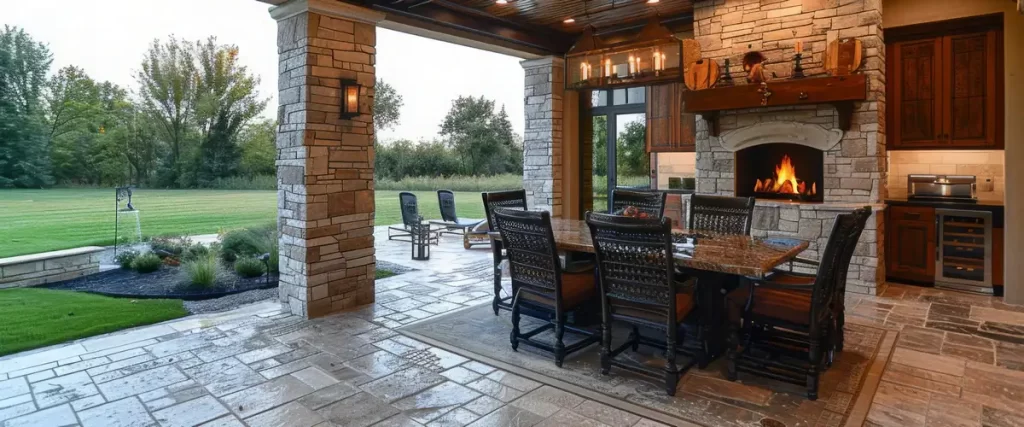
The Shift Happening in Outdoor Design Right Now
Something changed in how people relate to their outdoor living spaces. What used to be a deck and a couple of chairs has turned into a genuine extension of the home, complete with dedicated zones for cooking, gathering, and quiet mornings with coffee.
The outdoor living trends driving this in 2026 lean hard into all-season comfort. Fire features, covered seating areas, and ambient lighting aren’t upgrades anymore. They’re baseline expectations for spaces that serve multiple purposes across all four seasons.
A few things showing up consistently in modern outdoor living spaces this year:
- Fire pits and fire features built into the hardscape rather than freestanding, creating a permanent focal point rather than a movable afterthought
- Overhead structures with ceiling heaters and ambient lighting that extend usable hours into cold evenings
- Natural stone and natural materials that age gracefully through harsh weather without requiring constant maintenance
- Outdoor kitchens with counter space designed for real use, not just occasional grilling
Designing for Cold Without Sacrificing the Look
Winter outdoor living doesn’t mean industrial or utilitarian. The spaces that work best are the ones where thoughtful design and physical well-being actually overlap.
Natural surroundings play a bigger role in 2026 outdoor design than in previous years. Planting palettes built around native plants that stay visually interesting through dormancy, water features that can be winterized cleanly, and hardscape elements that complement the surrounding environment rather than fight it.
The materials you choose for cold-weather outdoor spaces matter more than most homeowners realize. Natural stone holds up. Composite decking holds up. Furniture built from recycled materials with sealed frames holds up. Anything porous or untreated will show damage by spring.
Here’s a straightforward breakdown of how common design elements perform through winter conditions:
| Design Element | Winter Performance | Maintenance Needed |
| Natural stone hardscape | Excellent | Seal every 2-3 years |
| Composite decking | Excellent | Minimal |
| Wood decking | Moderate | Annual staining/sealing |
| Fire pit (built-in) | Excellent | Cover when not in use |
| Outdoor kitchen (covered) | Good | Winterize appliances |
| Fabric furniture | Poor without covers | Store or fully cover |
| String/ambient lighting | Good with rated fixtures | Use weatherproof rated only |
The U.S. Department of Energy has solid guidance on energy efficiency for outdoor lighting specifically, which matters when you’re running ambient lighting through long winter nights.
Zones Make Outdoor Rooms Actually Function
One of the more practical shifts in outdoor design right now is the move toward dedicated zones within a single outdoor space. Large gatherings need open flow. Quiet mornings need a contained corner with seating that faces something worth looking at.
Getting zoning right doesn’t require a massive footprint. A 400-square-foot deck can serve as both a family gathering space and an intimate seating area if the layout is planned with both uses in mind from the start. Visual interest comes from level changes, material transitions, and how fire features or water features anchor different areas.
A landscape architect or experienced deck builder will spot these opportunities in the design process before anything gets built. After the fact, they’re much harder to retrofit.
The Wellness Side of Outdoor Spaces in 2026

Cold plunges, outdoor showers, and wellness spaces are showing up in more outdoor environments than most people expected a few years ago. The idea that outdoor living is just about entertaining has given way to something broader.
Smart technology plays a role here too. Smart irrigation systems keep plantings healthy with minimal intervention. Automated lighting adjusts to time of day. These systems reduce environmental impact and ongoing labor while making the space feel responsive rather than static.
FAQ
How much does a winter-ready outdoor space actually cost to build? It depends heavily on scope, but outdoor rooms with covered structures, fire features, and quality decking typically start around $15,000 and go up from there based on size and materials.
Can an existing deck be converted into a year-round outdoor space? Often yes, if the structure is sound. Adding a pergola, installing a fire feature, and upgrading lighting can transform an existing deck without full replacement.
What’s the best decking material for cold climates? Composite decking handles freeze-thaw cycles better than traditional wood decking.
Do outdoor kitchens need special weatherproofing for winter? Yes. Appliances, countertops, and cabinet materials all need to be rated for outdoor environments. Covered structures help significantly, but winterizing appliances each season is still recommended in cold climates.
Or, You Know, Just Call Us
Careful planning and long-term resilience in an outdoor space are real, but they take time to get right. If reading through all of this makes the project feel bigger than you want to manage on your own, that’s a completely reasonable reaction.
Take a look at our deck building services to see what we build, then call us at (317) 903-2431 or message us here and we’ll handle the planning and the build while you focus on actually enjoying the space.