
Farm-style homes in Eastern Nebraska carry a specific character that deserves outdoor living spaces to match. Your property likely sits on generous acreage with views worth protecting. The deck you build should honor that country setting while giving you real functionality for how you live today.
Modern farmhouse design blends traditional agricultural roots with contemporary comfort. Your outdoor space needs that same balance. You want somewhere to sit with morning coffee while watching the sunrise over your property, but you also need room to host summer gatherings without everyone cramming together.
Understanding What Makes Farm-Style Architecture Special
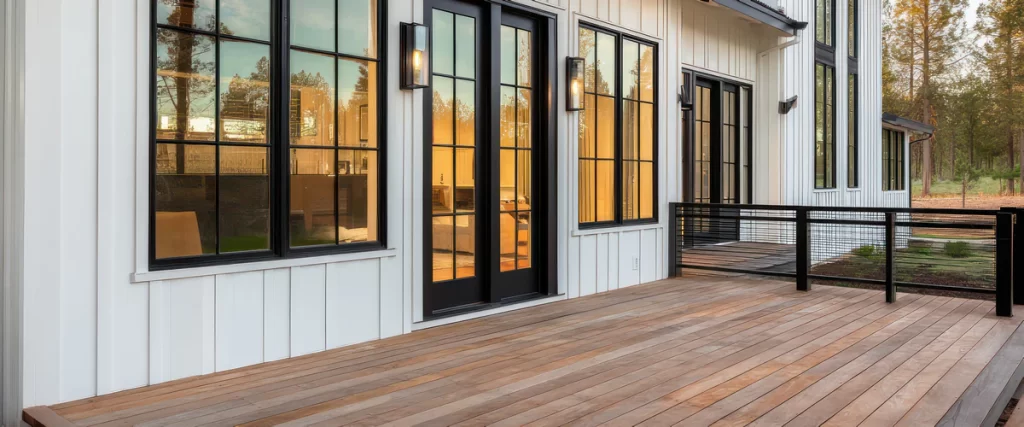
The homes dotting Eastern Nebraska’s countryside range from century-old structures to brand new builds inspired by agricultural tradition. Board and batten siding creates strong vertical lines that pull the eye upward. Horizontal siding offers a different rhythm. Some properties mix both for visual interest.
Pitched roofs handle snow loads through Nebraska winters. They also provide attic space and classic farmhouse proportions. Your deck design should complement these existing lines rather than compete with them.
Stone veneer or brick anchors many farm homes visually. These materials connect the structure to the earth. Natural elements matter in rural settings where you’re surrounded by fields, trees, and changing seasons.
How Decks Extend Your Living Space
Cathedral ceilings inside create drama, but they can make a single-story home feel disconnected from the outdoors. A well-designed back deck bridges that gap. You gain square footage without the expense of adding onto your house.
Picture windows and floor-to-ceiling windows bring natural light deep into farm homes. Your deck becomes an extension of those bright interior spaces. Position seating areas where you can move fluidly between inside and outside. The transition should feel natural, like walking from one room into another.
Some homeowners add a second-floor deck off the primary suite. That creates a private retreat separate from ground-level entertaining areas. You get sunrise views and a perfect spot for quiet mornings before the day gets busy.
Matching Deck Materials to Your Home’s Exterior
Your deck’s materials should work with what you already have. Vertical wood siding pairs beautifully with natural wood decking that weathers to silvery gray. The aging process adds character rather than looking worn out.
Composite decking requires less maintenance than natural wood. That matters when you’re managing acres of property and don’t want another chore. Modern composites come in colors that complement stucco exterior walls or painted wood without looking artificial.
| Material | Maintenance | Lifespan | Best For |
| Pressure-treated pine | Annual staining/sealing | 15-20 years | Budget-conscious builds |
| Cedar | Periodic sealing | 20-30 years | Natural appearance |
| Composite | Occasional cleaning | 25-30+ years | Low maintenance |
| IPE/hardwood | Annual oiling | 40+ years | Premium longevity |
Stone veneer columns on your deck echo existing architectural features on the main house. They create unity between structures, especially if you have a detached garage or guest cottage on the property.
Creating Covered Outdoor Spaces
A covered front porch practically defines farm-style living. Extending that concept to your back deck gives you usable space during rain and harsh sun. Covered porches let you enjoy outdoor living even when the weather turns unpredictable.
Exposed rafters under a deck roof add rustic charm while keeping costs reasonable. You can paint them to match the trim on your house or leave them natural for a more casual feel. The shadow patterns they create shift throughout the day, adding movement to your outdoor space.
Screened porch sections keep insects away during summer evenings. Eastern Nebraska’s mosquitoes can ruin an otherwise perfect night outside. Screens let breezes through while protecting your family and guests.

Some deck designs include both open and covered sections. You get flexibility to choose sun or shade depending on the season and time of day. That versatility means you’ll actually use the space year-round instead of abandoning it when conditions aren’t perfect.
Designing Around Your Property’s Natural Surroundings
Your yard probably includes mature trees, rolling terrain, or views across agricultural land. The deck should frame these features, not block them. Multi-level designs work beautifully on sloped lots. Each level can serve a different purpose while following the natural contour of your property.
Corner placements capture views in two directions. You might look toward the barn in one direction and across your garden in another. Angling deck sections creates interesting geometry that feels intentional rather than basic.
If you have a pond or small lake on your property, orient seating areas to face the water. The sounds and reflections become part of your outdoor living experience. You could even extend a deck out over the water’s edge, creating a dock-like platform for fishing or just dangling your feet.
Integrating Pools and Pool Houses
Farm properties often have room for amenities that suburban lots can’t accommodate. A pool transforms summer living, especially for families. The pool house becomes a changing area, storage for equipment, and sometimes a guest cottage for visitors.
Your deck can connect the main house to the pool area through thoughtful planning. Multi-level designs create distinct zones for different activities. One level might focus on dining while another surrounds the pool for sunbathing and supervision.
The Nebraska Department of Environment and Energy provides regulations on pool installations and water use that affect rural properties. Their guidelines help homeowners plan pools that work within local water table considerations and safety requirements.
Landscaping around pool decks needs plants that tolerate splashing and filtered pool water. Native grasses and prairie plants often handle these conditions better than finicky ornamentals. They also look right at home in Eastern Nebraska’s countryside.
Porches Versus Decks: Choosing What Fits
A wraparound porch suits traditional farmhouse styles perfectly. It provides covered outdoor space on multiple sides of your house. You can follow the sun throughout the day or escape it when needed.
Decks work better when you want a larger flat entertaining space or need to accommodate sloped terrain. They’re also simpler to add onto an existing deck without major structural changes to your house.
Some farm homes benefit from both. A covered front porch maintains curb appeal and provides that classic farmhouse look. A back deck creates a modern outdoor living space with room for grills, fire pits, and comfortable seating areas that might overwhelm a traditional porch.
The great room inside many modern farmhouses opens directly onto decks through multiple doors. This indoor-outdoor living flow lets you expand entertaining space dramatically when hosting larger groups.
Adding Architectural Features That Match Your Style
A stone chimney on your house suggests you might want a fireplace on your deck too. Outdoor fireplaces anchor seating areas and extend the useful season by several weeks on both ends of summer. They create a focal point that draws people together.
Railings affect how your deck looks and functions. Simple modern lines suit contemporary farmhouse designs. More ornate balusters work with traditional country aesthetics. Glass panels preserve views while meeting safety requirements.
A fresh coat of paint on railings and trim brightens existing deck spaces. Choosing colors that echo your house helps everything feel cohesive. Whites and grays stay classic. Darker colors recede visually, making railings less prominent.
Built-in benches along railings save space and provide abundant seating without cluttering your deck with furniture. Storage underneath holds cushions during the winter months. These functional details add character while solving practical problems.
Planning Deck Size and Layout
Square footage on your deck should match how you’ll actually use the space. A couple might need only 200-300 square feet for intimate dinners and morning coffee. Families who entertain regularly want 500+ square feet to accommodate multiple seating areas, a grill station, and room for kids to move around.
Flat roof structures over portions of larger decks create defined zones. One section might become an outdoor dining room while another stays open for sunbathing. The roof adds visual interest from the yard and provides welcome shade.
Flow between areas matters as much as total size. You need clear paths for moving food from the kitchen to the grill and from the grill to the table. Guests should circulate easily without bottlenecks.
Think about your lawn and how people move between the deck and the yard. Steps should land where they make sense for accessing your garden, heading toward the garage, or reaching other parts of your property.
Working With Professionals Who Understand Rural Properties
Building decks in Eastern Nebraska involves different considerations than suburban construction. Soil conditions vary. Wind loads differ. Access to your property might limit equipment options during construction.
Experienced builders know how to work with farm property constraints. They can plan material deliveries around planting or harvest schedules. They understand that your driveway might not handle fully loaded concrete trucks the same way suburban streets do.
Permits and inspections still apply in rural areas, though the process sometimes moves differently than in cities. Professional deck builders handle these requirements so you can focus on the fun parts, like choosing finishes and planning furniture placement.
Getting Your Dream Deck Without the Headache
You’ve read about materials, layouts, and design options. Now you’re probably thinking about all the decisions still ahead. Coordinating contractors, choosing between dozens of material options, and managing construction timelines takes time you might not have.
We work with farm-style homes throughout Eastern Nebraska regularly. Our team knows which deck designs complement different architectural features and how to build structures that stand up to country weather conditions. You can look at our deck building services to see the range of projects we handle, then call us at (317) 903-2431 or message us here to start planning your outdoor living space.