
Living on acreage between Omaha and Lincoln gives you something most homeowners dream about: space. Actual room to breathe, to stretch out, to build something that matches the scale of your property. But here’s what happens with a lot of acreage homes. The house sits there, beautiful and promising, while the outdoor areas remain underdeveloped or disconnected from the surrounding landscape.
A thoughtfully designed deck changes that entirely.
When you have multiple acres, your outdoor living space becomes an extension of how you experience your property. The deck becomes a launching point for summer evenings, a gathering spot when family visits, and a place where the indoors meet the outdoors without feeling forced. For acreage homeowners in eastern Nebraska, deck design means thinking bigger and more intentionally than standard residential projects.
Why Acreage Properties Need Different Deck Approaches
Smaller suburban lots come with built-in constraints. You’re working around neighbors, fence lines, and limited square footage. Acreage is the opposite problem. You have options, maybe too many, and that can make planning harder than it sounds.
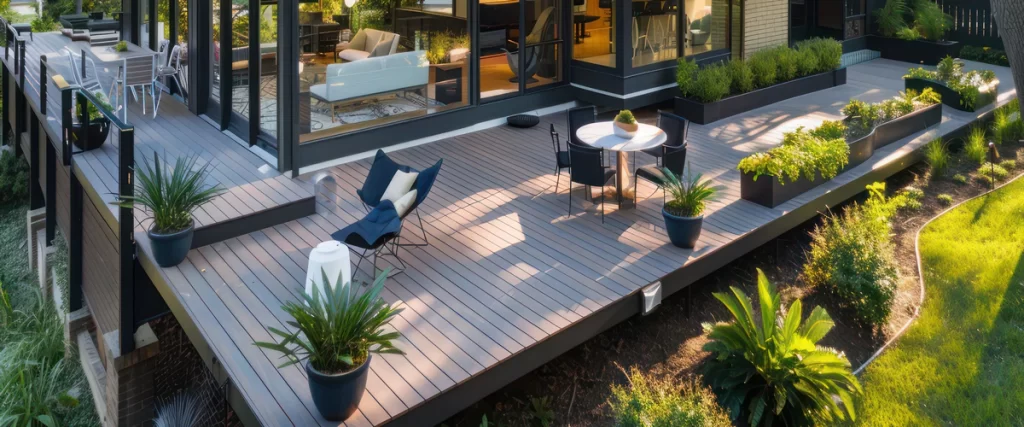
The setting matters here. If your home sits on rolling terrain near the Platte River or overlooks open farmland, your deck needs to complement that vista rather than compete with it. Clean lines work well because they don’t clutter the view. Multi-level designs help when your property has natural elevation changes, letting you create distinct zones for cooking, lounging, or watching the sunset over Nebraska prairie.
Materials also shift in importance. Wood decks require regular maintenance, which becomes more demanding when you’re managing acreage responsibilities on top of it. Trex and similar composite options handle freeze-thaw cycles better and need minimal upkeep, which frees up your schedule for other property projects.
Unlike wood, composites resist moisture damage and don’t splinter, warp, or need annual staining.
Custom Features That Make Sense on Large Properties
Acreage gives you room to think beyond a simple rectangular deck. You can layer in features that would feel cramped on a quarter-acre lot but make perfect sense when you have space to work with.
Fire pits create natural gathering points. On cooler Nebraska evenings, a built-in fire feature keeps guests comfortable and adds ambiance that changes how people use the space. Position it away from the main house so smoke disperses naturally, and consider surrounding seating that encourages conversation.
Outdoor kitchens transform how you entertain. When you’re hosting families or large groups, moving the cooking outdoors keeps everyone together instead of isolating whoever’s at the stove. Built-in grills, prep counters, and storage make the space functional enough for actual meal preparation, not just reheating food.
A covered patio or covered deck section extends usability into shoulder seasons and during summer storms. You’re not racing to move furniture every time clouds roll in, and the coverage creates a room-like feel that makes the outdoor space more inviting even on bright days when shade matters.
Pergolas add vertical interest and can support climbing plants that grow into living shade structures over time. They also help define zones on larger decks, breaking up what might otherwise feel like an overwhelming amount of open space.
The key is seamless integration. Custom features should feel like they belong to both the deck and the property, not like they were added as afterthoughts.
Design Considerations for Nebraska Weather

Eastern Nebraska weather tests outdoor construction year-round. Summer heat, winter cold, spring storms, and humidity all put stress on deck materials and framing. Ground conditions shift with freeze-thaw cycles, which affects how posts and footings need to be installed.
Drainage becomes more complex on acreage because you’re often dealing with natural slopes and soil variations. Water needs somewhere to go that won’t undermine your deck structure or create erosion problems around your property. Proper grading during installation prevents long-term issues that are expensive to fix later.
Material selection directly impacts durability. Low-maintenance composites handle temperature swings better than traditional wood, and they don’t absorb moisture the way wood does. That makes them more resistant to rot, warping, and the kind of weathering that shortens the lifespan of outdoor structures in climates like ours.
Local building codes also come into play. The Nebraska Department of Environment and Energy provides guidelines for residential construction that include setback requirements and structural standards you’ll need to follow. Working with experienced custom deck builders who know these regulations saves you from permit headaches and ensures your project meets safety standards.
Matching Deck Style to Your Home and Landscape
Your deck should enhance your property value by complementing your home’s architecture and the surrounding environment. A modern farmhouse calls for different design choices than a traditional ranch or contemporary build.
Cozy spaces work well when balanced with open areas. You might create an intimate corner with built-in seating for morning coffee while keeping a larger open section for entertaining guests. The style should reflect how you actually plan to use the outdoor space.
Colors and finishes matter more on acreage because you’re often viewing the deck from multiple angles across your property. Neutral tones blend with natural surroundings. Bold choices can create focal points but need careful consideration so they don’t feel out of place against prairie landscapes or wooded settings.
Think about sightlines from different parts of your property and from inside your home. Windows and doors should frame the deck as part of a cohesive view, not as something that interrupts the landscape. Roofing lines, siding colors, and existing outdoor features all influence which deck designs will look intentional versus tacked on.
The Construction Process for Acreage Deck Projects
Building on acreage comes with logistical differences compared to typical residential construction. Access, materials delivery, and site preparation all take longer when you’re working with more land and potentially rougher terrain.
The project typically starts with site evaluation. A good team will assess your property’s unique needs, including soil conditions, drainage patterns, and how the deck will connect to your home’s existing structure. They’ll also discuss your budget and help you prioritize features that matter most.
Framing and foundation work take up the first phase of construction. Posts need to be properly anchored below frost lines, which in Nebraska means going deep enough to stay stable through winter. The framing creates the skeleton that everything else builds on, so getting this right matters for long-term structural integrity.
Materials selection happens early but affects every stage. If you’re going with composite decking, installation differs from wood. The fastening system, spacing, and ventilation requirements all change. Custom features like built-in planters, lighting, or kitchen elements need to be planned into the framing rather than added afterward.
Timeline depends on size and complexity. A straightforward single-level deck might take a few weeks from start to finish. Multi-level designs with covered sections, outdoor kitchens, and custom features can stretch into months, especially if weather delays construction or if you’re coordinating with other property projects.
Why Experience Matters with Acreage Builds
Large outdoor spaces reveal inexperience quickly. Poor drainage shows up as standing water. Inadequate framing leads to bounce or sway. Materials that weren’t rated for Nebraska weather start failing within a few seasons.
A family-owned company that specializes in deck services understands local conditions because they’ve built through them repeatedly. They know which material costs make sense for different budgets, how to schedule around Nebraska weather, and what construction techniques hold up long-term.
They’ll also handle coordination you might not think about. If your deck project involves electrical work for lighting or outdoor kitchen appliances, experienced builders work with licensed electricians to keep everything up to code. Same with any plumbing for outdoor sinks or gas lines for grills and fire pits.
The investment in quality construction pays back through durability and reduced maintenance. You’re not redoing sections in five years or dealing with structural problems that could have been avoided with proper installation.
Creating the Outdoor Space You’ll Actually Use
The best deck designs start with honest conversations about how you live.
Do you entertain large groups regularly, or is this more about family time? Are you looking for a quiet spot to unwind after working on the property, or do you want room for kids and guests to spread out?
Functionality should drive the plan. If you cook outdoors often, the kitchen area needs real counter space and storage. If you want to use the deck from spring through fall, covered sections become more important. If you’re near Council Bluffs or closer to Lincoln, think about prevailing winds and where afternoon sun hits your property.
The goal is to create outdoor features that elevate your daily life on the acreage, not just adding square footage because you can. Every element should serve a purpose that makes sense for how you actually use your property.
Let’s Build Something That Matches Your Vision
Reading through deck ideas and seeing photos online gives you inspiration, but turning that into a functional outdoor space on your specific property takes experience and planning. You could spend months researching materials, getting permits, figuring out drainage, and hoping the end result matches what you pictured.
Or you could work with people who’ve already built dozens of custom decks on acreage properties between Omaha and Lincoln.
People who know how to create something durable, beautiful, and actually built for Nebraska weather and landscape. If you’re ready to explore what’s possible for your property, call us at (317) 903-2431 or message us here. We’ll come out, look at your space, and talk through deck designs that make sense for how you want to use your acreage.
For more details on our approach and previous deck projects, visit our deck building service page.